

PORTS & MARITIME
Ports are Under Compliance Scrutiny. We Help You Stay Ahead.
Continuous water quality intelligence for port operators navigating tighter regulation, rising fines, and real-time compliance demands.
Talk to us
THE CHALLENGE
Ports Are Drowning in Compliance Obligations They Can’t Monitor in Real Time
Reactive, Not Proactive
Manual periodic sampling misses transient pollution events. Lab turnaround takes 5–14 days. Problems are already past before action can be taken. Four in five European ports monitor water quality — but monitoring is periodic, not continuous (ESPO EcoPortsInsights 2024).
Regulatory Pressure Is Increasing
EU ETS (maritime from Jan 2024), D-2 ballast water (100% mandatory Sept 2024), MSFD Descriptor 11 binding underwater noise limits (March 2024), and the EU Environmental Crime Directive now classifies noise threshold breaches as criminal. Only 11% of ports monitor underwater noise (ESPO).
Fines Are Real and Growing
MARPOL criminal fines run $1M–$4.5M per case. EU ETS non-compliance: €100/tonne CO2 plus potential EU port ban. Dec 2024: Greek shipping companies fined $3.375M + $1.125M for bilge water discharge and record falsification. The risk of inaction is measurable.
€100/t
EU ETS non-compliance penalty
14 days
Typical lab analysis turnaround
11%
Ports monitoring underwater noise (ESPO)
$4.5m
Max MARPOL criminal fine
HOW NIRA HELPS
Continuous, Automated Water Quality Intelligence — Deployed Directly in Your Port
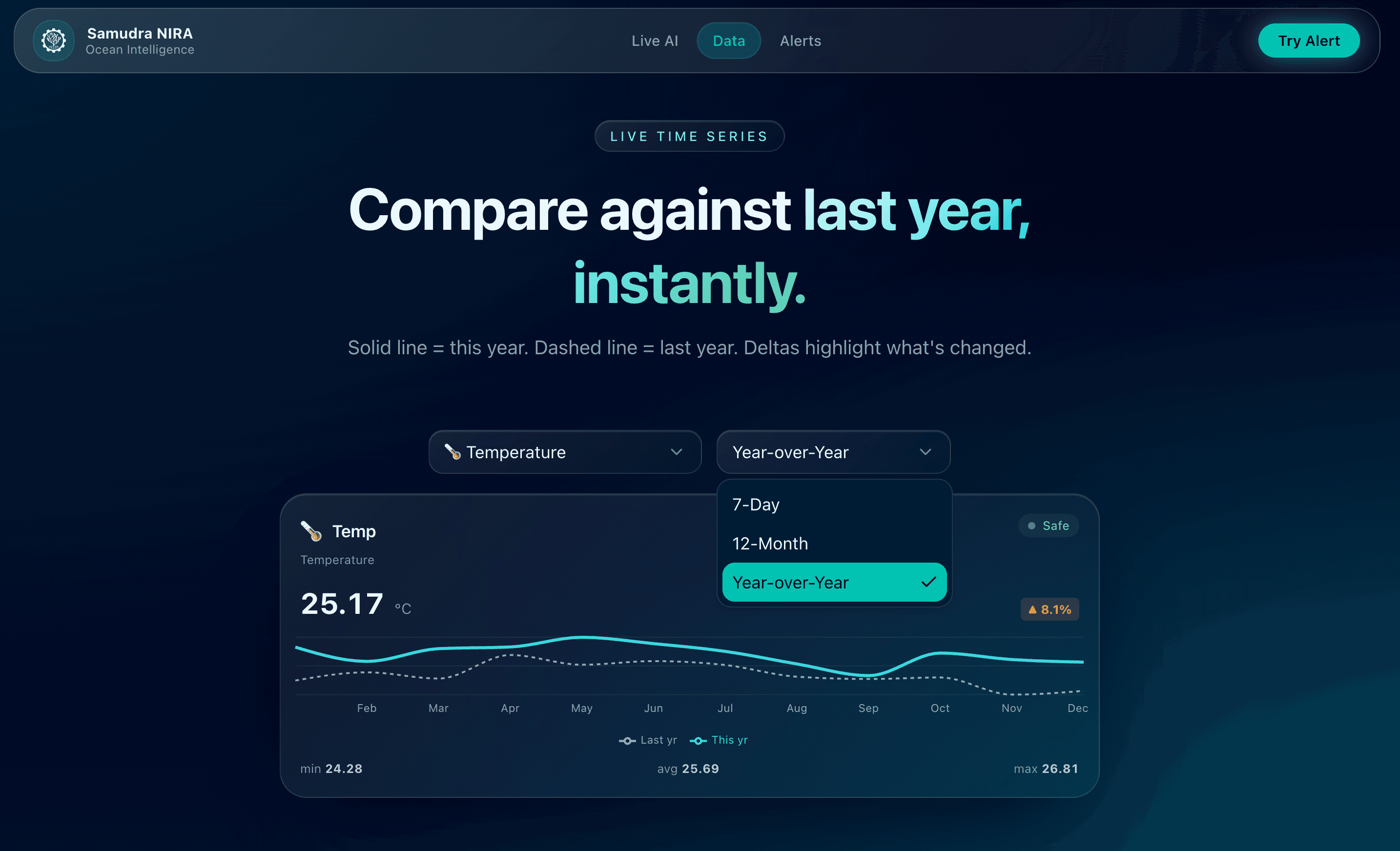
NIRA is a lightweight, battery-powered subsea monitoring system that measures water quality parameters continuously at depth — no cranes, no specialist vessels, no lab turnaround. Data flows directly to your compliance dashboard in real time.
→ Real-time DO, turbidity, pH, salinity and temperature monitoring
→ Automated regulatory reporting — no manual data entry
→ Instant alerts for discharge events and anomaly detection
→ Lightweight deployment — under 15kg, single operator, no crane required
KEY METRICS
The financial exposure of non-compliance.
$4.5m
Typical MARPOL criminal fine
Criminal fines for illegal bilge water discharge and record falsification run $1M–$4.5M per case. Dec 2024: Greek shipping companies fined $3.375M + $1.125M. Civil settlements add further six-figure exposure.
€100/t
EU ETS non-compliance penalty
€100 per tonne CO2 not covered by EUAs, plus potential ban from EU ports for persistent offenders. EU ETS mandatory for maritime from January 2024, rising to 100% coverage by 2027.
£822k
Port of Dover environmental spend (2023)
68% of total SHEQ budget. Port of Seattle secured ~$33M in environmental cleanup cost recovery in 2024. Port of Everett: environmental remediation = 7.6% of total annual budget.
RELEVANT REGULATIONS
A converging set of obligations — and tightening deadlines.
IMO MARPOL
Annexes I–VI cover oil, noxious liquids, sewage, garbage, and air emissions. Illegal discharge and falsified records are criminal offences with significant fines and vessel detention.
EU Emissions Trading System (ETS)
Maritime included from January 2024. 40% of 2024 emissions covered, rising to 70% in 2025 and 100% from 2027. Non-compliance: €100/tonne CO2 plus potential EU port ban.
BWM Convention — D-2 Standard
100% of applicable vessels must meet IMO D-2 biological treatment standard from September 2024. Paris and Tokyo MoUs ran Concentrated Inspection Campaign Sept–Nov 2025.
MSFD Descriptor 11 — Underwater Noise
EU established binding underwater noise limits March 2024. Member States required to integrate by October 2024. The revised EU Environmental Crime Directive classifies threshold breaches as criminal offences. Only 11% of ports currently monitor.
EU Habitats Directive / UK BNG
Ports adjacent to Natura 2000 or Marine Protected Areas require Habitat Regulations Assessment for development. UK Environment Act 2021 introduced mandatory Biodiversity Net Gain for port infrastructure projects.
Paris / Tokyo MoU PSC
Port State Control enforcement regimes inspect vessel compliance with MARPOL, BWM Convention, SOLAS, and MLC. Deficiencies and detentions result in reputational and financial penalties for operators.
Ready to Move Beyond Manual Monitoring?
Talk to our team about deploying NIRA at your port. We’ll show you exactly what continuous water quality intelligence looks like in practice.
Book a Demo